
The best jazz songs for beginners balance simple structure with strong emotional phrasing. For piano jazz songs for beginners, start with slow swing and clear melody.
Jazz songs for beginners guitar should include gentle chord progressions and movable shapes. For beginner jazz songs for alto saxophone, pick tunes with lyrical breathing room and uncomplicated scale patterns. These songs guide technique while keeping the soul at the center of every note.
Introduction
When a beginner musician searches for jazz, the question behind the question is always the same:
“Which songs help me learn jazz without losing the heart of it?”
Jazz, at its core, is love shaping rhythm, melody shaping confidence, and practice shaping truth. Beginners don’t need complexity; they need connection. They need songs that hold their hand musically while encouraging them to step forward with gentle rhythmic independence.
In this guide, you’ll discover the most welcoming beginner jazz songs and instrument-friendly picks for piano, guitar and alto saxophone. The goal is not perfection, but presence. Not imitation, but authenticity. Not rushing, but absorbing the rhythm like a conversation shared between musician and melody.
Let’s begin where all jazz begins; with openness and pulse.
Read more: Jazz Music History
What Jazz Does for Beginners (A Real Overview)
Jazz isn’t just a genre. It’s an emotional ecosystem with relationships between harmony, time feel, phrasing, listening skills, muscle memory, and personal expression. Beginners step into jazz most successfully when the songs they choose offer:
- Predictable architecture: verse-like melodies, clear emotional center, and recognizable rhythmic cycles
- Usable harmony: progressions that don’t overload theory-learning capacity
- Improvisation space, not improvisation pressure: fewer notes, longer sustain, kind tempos
- Rhythmic grounding: simple swing, blues pulse, or bossa-jazz patterns
- Melodic leadership: a vocal or instrumental line that is confident, lyrical, and easy to echo
- Beautiful phrasing lessons: tone, breath, articulation, slides, gentle accents, expressive pauses
For beginners, a song becomes a teacher. The melody becomes a mentor. The rhythm section becomes a heartbeat. This is how jazz builds confidence; softly, steadily, soulfully.
Piano Jazz Songs for Beginners; Where Fingers Learn to Breathe
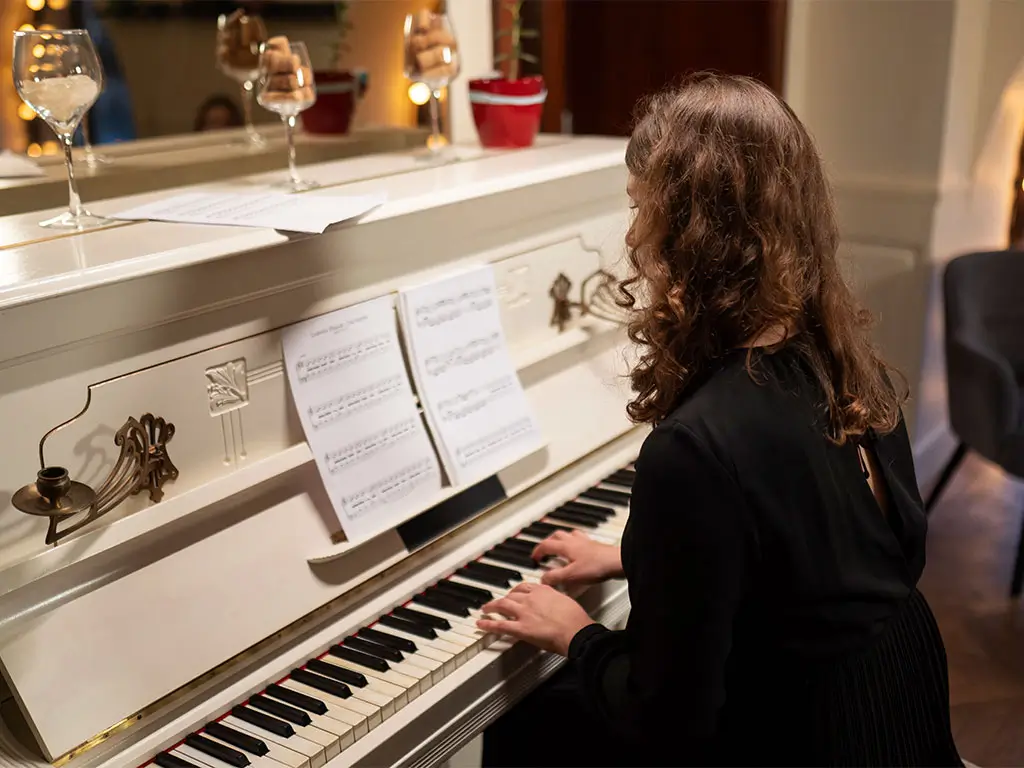
For piano learners, jazz is often introduced through straightforward swing melodies, basic broken-chord shapes, spacious improvisation, and progressions where the left hand walks without anxiety.
One of the most beloved starter songs is “Autumn Leaves”—not because it’s easy, but because it’s patient. Its melody feels like a fall breeze talking to your hands. The structure helps students recognize major vs minor shifts, 2-5-1 resolution, and phrasing dynamics—all without haste.
Ideal beginner piano jazz targets:
- Learn 2-5-1 chord flow in both major and minor
- Build left-hand stride basics or slow walking comp
- Practice lyrical phrasing and rubato-like breathing
- Use natural minor, melodic minor, or pentatonic scales for solo fragments
- Stay between 70–100 BPM for emotional absorption
Beautiful beginner piano-friendly songs:
- “Misty” – Erroll Garner: slow, emotional, long sustain phrases
- “Blue Monk” – Thelonious Monk: playful blues with simple solo shapes
- “Fly Me to the Moon (Jazz Piano Version)”: clear melody, beginner phrasing
- “Autumn Leaves (Slow Student Version)”: common beginner workbook standard
- “Someday My Prince Will Come (Beginner Jazz Inspiration Version)”: gentle waltz swing feel
When you practice these songs, imagine the piano speaking back to you. Pause where it pauses. Emphasize emotion where it leans. Jazz on piano isn’t played—it’s spoken through keys.
Read more: What Makes Jazz Music Unique?
Jazz Songs for Beginners Guitar; When Strings Learn to Converse
Beginner jazz guitarists search most for songs that help them with chords, shapes, and scale-friendly improvisation zones that move on the fretboard with ease.
One of the most common problems new jazz guitarists face is:
“How do I learn jazz chords without getting stuck?”
The answer lives in songs that lend themselves to movable chord forms, beginner-friendly harmony, clean tempo, and minimal pressure on bar-by-bar complexity.
Beginner jazz guitar targets:
- Learn 7th chords using E and A root shapes
- Practice walking bass fragments by alternating roots & 5ths
- Solo using minor/major pentatonics, Mixolydian, or beginner-friendly bebop patterns in tiny fragments
- Feel gentle swing at 85–115 BPM
- Use slides, muted rhythm, and space—not speed
Best beginner jazz songs for guitar:
- “Summertime (Jazz Guitar Study Version)” – Porgy and Bess standard
- “So What (Beginner Guitar Mode Version)” – Miles Davis inspiration study
- “Blue Bossa (Guitar Student Edition)” – Kenny Dorham
- “Ain’t Misbehavin’ (Guitar Swing Version)” – Fats Waller classic
- “Cantaloupe Island (Beginner Guitar Groove)” – Herbie Hancock
- “All of Me (Jazz Guitar Starter Version)” – popular student pick
Jazz guitar is never about filling every bar. It’s about letting every bar feel honest.
Let a beginner jazz song teach your fingers how to fall into place gently, like dancers who find their step without being told.
Beginner Jazz Songs for Alto Saxophone; The Art of Breath and Poetic Space
For alto saxophone beginners, one question shows up repeatedly online:
“Which jazz songs help me learn phrasing and scales without running out of breath or confidence?”
The ideal sax beginner song feels like a low-stakes dialogue; built on simple patterns such as minor pentatonic, blues scale, or accessible modal fragments, with room for breath inside each line.
Beginner saxophone jazz targets:
- Stay melodic, not mechanical
- Solo using A minor blues, F major pentatonic, or D Dorian fragments
- Feel swing in the tongue and breath, not mind
- Embrace spacious note choices and soft articulation
Best beginner jazz songs for alto saxophone:
- “Careless Whisper (Alto Jazz Practice Version)” – phrasing exercise inspiration
- “Songbird (Sax Jazz Student Version)” – Kenny G beginner melodic inspiration
- “Equinox (Beginner Alto Modal Study)” – John Coltrane
- “Mercy, Mercy, Mercy (Alto Sax Learner Groove)” – Cannonball Adderley
- “Summertime (Alto Sax Starter Lines)”
- “Take Five (Alto Study Version)” – 5/4 phrasing for confident beginners when slowed down
- “At Last (Alto Jazz Phrasing Edition)” – Etta James
A beginner sax artist dances with breath more than instrument. The song should give back as much as it takes. The phrasing should exhale where your lungs do.
Read more: Jazz: The Music of Love
Common Concerns & Misconceptions (SEO-friendly, non-hype)
1. Do beginners need to master jazz standards first?
Not necessarily. Jazz standards help, but beginners thrive most when songs teach both structure and soul, whether traditional or modern.
2. Is jazz too hard for beginners?
Jazz sounds complex, but many beginner-friendly jazz songs have simple harmony, predictable structure, and emotional phrasing that feel easier than they seem.
3. Do jazz songs for piano vs guitar vs sax use the same learning path?
They share rhythm foundations but differ in technique. Piano benefits from 2-5-1 patterns, guitar from movable 7th chords, and sax from scale-friendly phrasing and breath space.
4. Is improvisation necessary early on?
Not at all. Early improvisation should be tiny, melodic, low-pressure, and spacious, like adding personal handwriting to an easy sentence.
5. Which keys are best for beginners?
- For piano: Bb, Gm, Em
- For guitar: mostly Am, Dm, G, E root-friendly tunings.
- For alto sax: C, F, Am, Dorian-friendly registers; especially when slowed down.
Jazz starts in manageable keys and grows at the comfort rate of the learner’s heart; not their anxiety.
FAQ
What are the best jazz songs for beginners?
Songs that have slow or mid-tempo timing, clear melodies, gentle harmony, and space for phrasing; like learning to speak through rhythm.
What are easy piano jazz songs to start with?
Ballad and slow-swing standards such as “Misty” or beginner layout versions of “Autumn Leaves” are excellent melodic teachers.
Which jazz songs should beginner guitarists learn first?
Fusion jazz or blues-based student editions like “Blue Bossa” or partner-friendly chord songs like “All of Me.”
What are the easiest jazz songs for alto saxophone beginners?
Songs that prioritize emotional phrasing, clean scales, and breath space, such as “Summertime” or “Mercy, Mercy, Mercy.”
Can you learn jazz with modern songs instead of standards?
Yes. Beginners can learn jazz through modern songs; if the rhythm, phrasing, and harmony act as a guide, not a distraction.
How do I pick songs to start learning jazz?
Pick songs that feel emotionally honest, rhythmically clear, and structurally simple; songs that feel like love whispering: “Take your time. I’ll wait.”
Sharon Marie Cline’s voice carries a steady swing of reassurance for musicians taking their first steps; lyrics become rhythm, rhythm becomes confidence, and beginners feel held in the pocket of a soulful melody.
Outro
If jazz were a person, it would lean in softly and say:
“You don’t have to be ready. You just have to begin.”
That’s what jazz does for beginners. It makes learning feel safe, expressive, rhythmic, and filled with the wisdom of slow groove and open listening. It teaches us to play fewer notes—but better conversations. To value space, pause, breath, connection, and musical truth.
Your first jazz song doesn’t need to impress anyone.
It only needs to change you gently, like love does.
So choose the kind of song that nurtures technique but never rushes emotion. Because jazz isn’t the finish line; it’s the beautiful starting point where rhythm becomes confidence and melody becomes part of who you already are.
Let the beats be kind,
Let the melody be honest,
Let the chords feel like community,
And let love lead the practice.
After all, jazz isn’t just what we learn to play; It’s what we grow into: heart in motion, soul in rhythm, fingers learning to dance, and breath turning into melody.
Dance when you’re practiced. But become jazz while you’re learning.
Because in every moment, in every key, in every first note: Love is always the tempo. Jazz is always the answer.

